Learn How to perform a Plank
By Toby Williamson · February 1, 2026
Overview
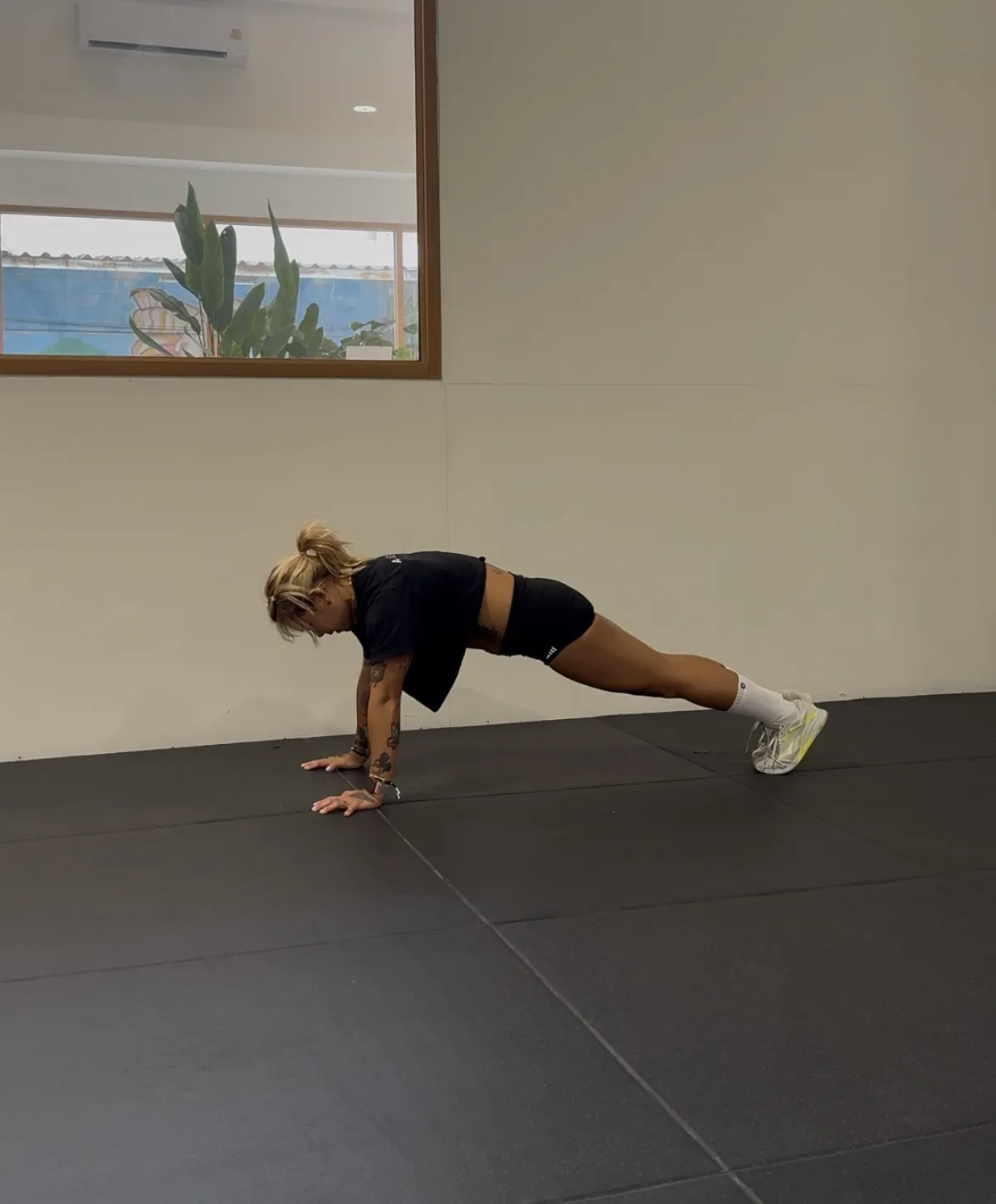
The plank looks simple—support your body in a straight line on forearms and toes—but doing it well unlocks deep core strength, postural endurance, and anti‑extension control that carries over to nearly every athletic movement.
Because it teaches the trunk to resist spinal extension and rotation, a strong plank supports heavier squats and presses, reduces lower‑back strain in running, and lays a foundation for advanced gymnastics shapes like the hollow hold.
Learn How to Perform a Plank
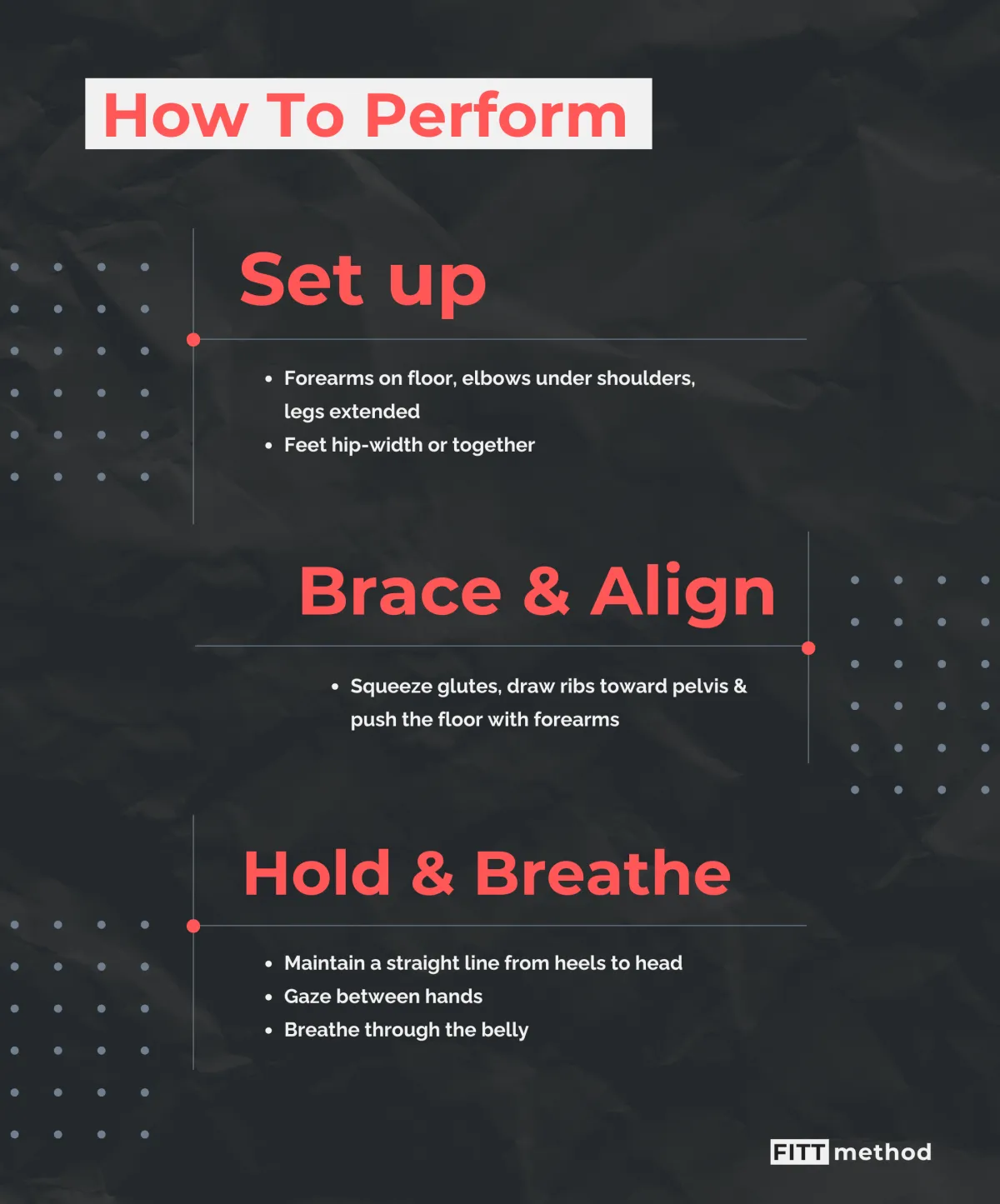
Dial in these checkpoints for a rock‑solid front plank:
-
Set‑Up: Forearms on floor, elbows under shoulders, legs extended. Feet hip‑width for stability or together for added difficulty.
-
Brace & Align: Squeeze glutes, draw ribs toward pelvis, and push the floor away with forearms to protract the scapulae.
-
Hold & Breathe: Maintain a straight line from heels to head, keep gaze between hands, and breathe through the belly without losing tension.
Coaching Cues“Glutes on”“Ribs to hips”“Push the floor”
Technique Focus
The magic of the plank is total‑body tension. Contract quads, glutes, and lats simultaneously; envision drawing the floor together between elbows and toes to engage every fibre.
Avoid sagging hips or piking. Filming from the side or using a dowel along the spine provides instant feedback on alignment.
-
Neutral spine—no lumbar dip or upper‑back round.
-
Posterior tilt—glute squeeze flattens low back.
-
Protracted shoulders—push away to engage serratus.
Popular Plank Variations
Once the basic front plank is steady for 60 s, progress or lateralize the challenge with these variations:
-
Side Plank – trains lateral chain and anti‑rotation.
-
RKC Plank – elbows forward, heels back, maximal tension for 10‑20 s bouts.
-
Long‑Lever Plank – elbows positioned ahead of shoulders to increase lever arm.
-
Plank with Shoulder Taps – lift one hand to tap opposite shoulder, resisting rotation.
-
Swiss‑Ball Stir‑the‑Pot – forearms on ball, draw small circles to challenge dynamic stability.
Scaled Options
Newer athletes should master tension against gravity before adding load or leverage.
Reduce intensity by elevating the forearms on a box or dropping knees while keeping hips forward to preserve straight‑line posture.
-
Incline plank on bench.
-
Knee plank with hips in line (not back).
Benefits & Carryover
Planks train the core to resist unwanted motion rather than create it, improving transfer to barbell lifts, kettlebell swings, and sprinting.
Endurance in the plank position supports longer handstand holds and protects the spine during loaded carries.
Programming Tips
Base work: accumulate 2–3 min of perfect planks in sets of 20–40 s, rest equal time. Quality beats duration.
For strength phases, use harder variations (RKC plank) for 3–5 sets of 10–20 s max‑tension holds.
In metabolic conditioning, pair planks with explosive hip‑hinge moves (e.g., kettlebell swings) to maintain core integrity under fatigue.
Wrap‑Up
A disciplined plank practice cements the mid‑line integrity that heavy lifting and high‑speed sport demand. When you learn how to perform a plank, progress through leverage and anti‑rotation challenges, not sloppy time records. Keep every rep intentional and you’ll build a core that stabilizes PR squats and fuels efficient endurance pacing.