What is a Renegade Row?
By Toby Williamson · January 28, 2026

Overview
The renegade row combines a plank hold with unilateral dumbbell rows. By forcing you to resist rotation while pulling, it targets lats, rhomboids, and biceps while crushing the obliques and deep core stabilizers.
Because each rep demands full‑body tension, the movement bridges strength work and anti‑rotation training, making it a favorite in functional bodybuilding, CrossFit accessory blocks, and athletic programs that value trunk control under load.
How to Perform
Lock in these checkpoints every rep:
-
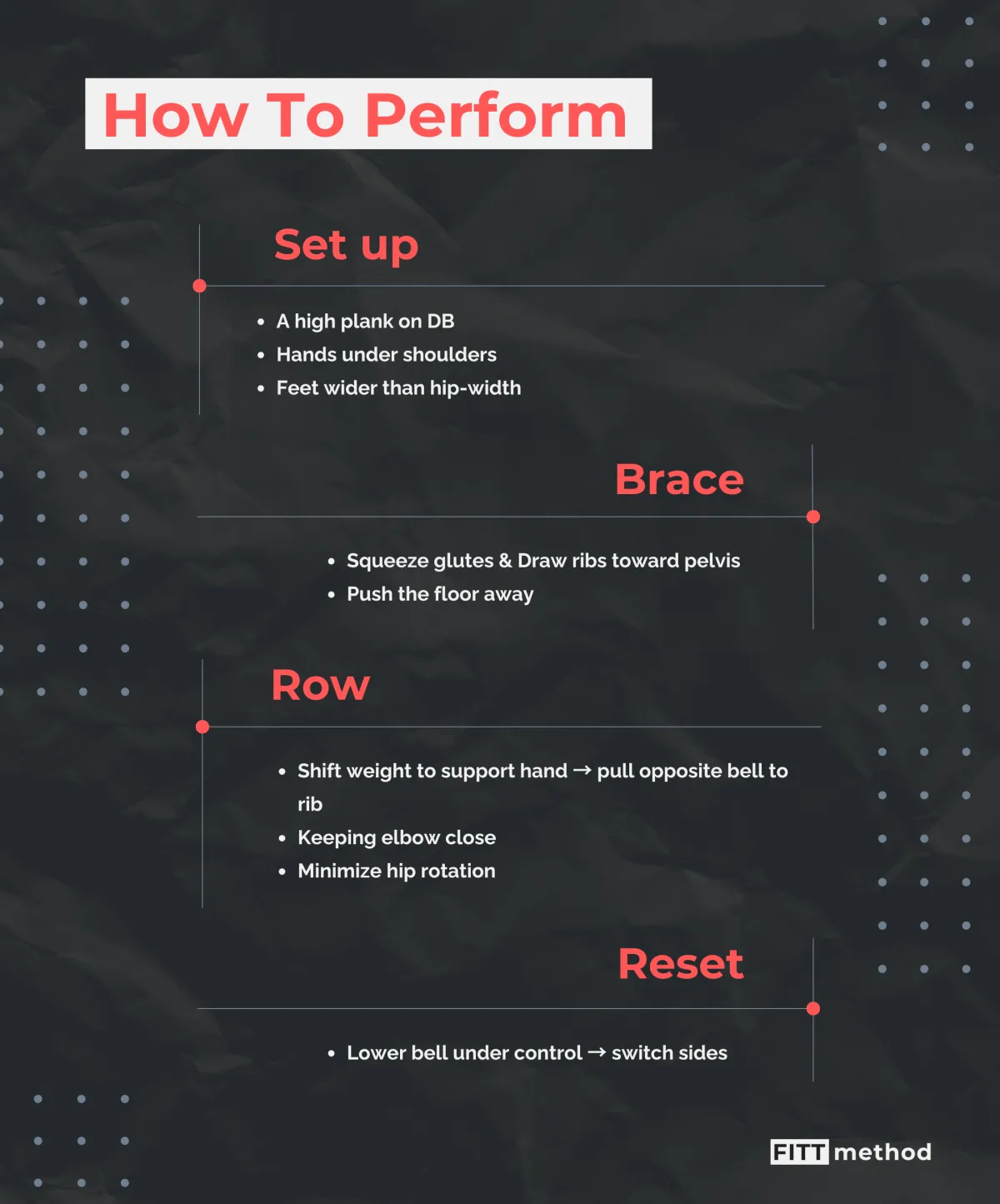
Set‑Up: Start in a high plank on dumbbells (hex bells won’t roll). Hands under shoulders, feet wider than hip‑width for stability.
-
Brace: Squeeze glutes, draw ribs toward pelvis, and push the floor away so scapulae protract slightly.
-
Row: Shift weight onto support hand, pull opposite bell toward rib cage, keeping elbow close. Minimize hip rotation.
-
Reset: Lower bell under control, re‑establish square hips, then switch sides.
🎯Coaching Cues🎯“Plank first, then row”“Hips stay square”“Pull elbow past rib.”
Technique Focus
The wider your feet, the easier it is to fight rotation. Start wide, then narrow stance as core strength improves.
Row path matters: lead with the elbow, not the hand, to engage mid‑back instead of biceps only.
-
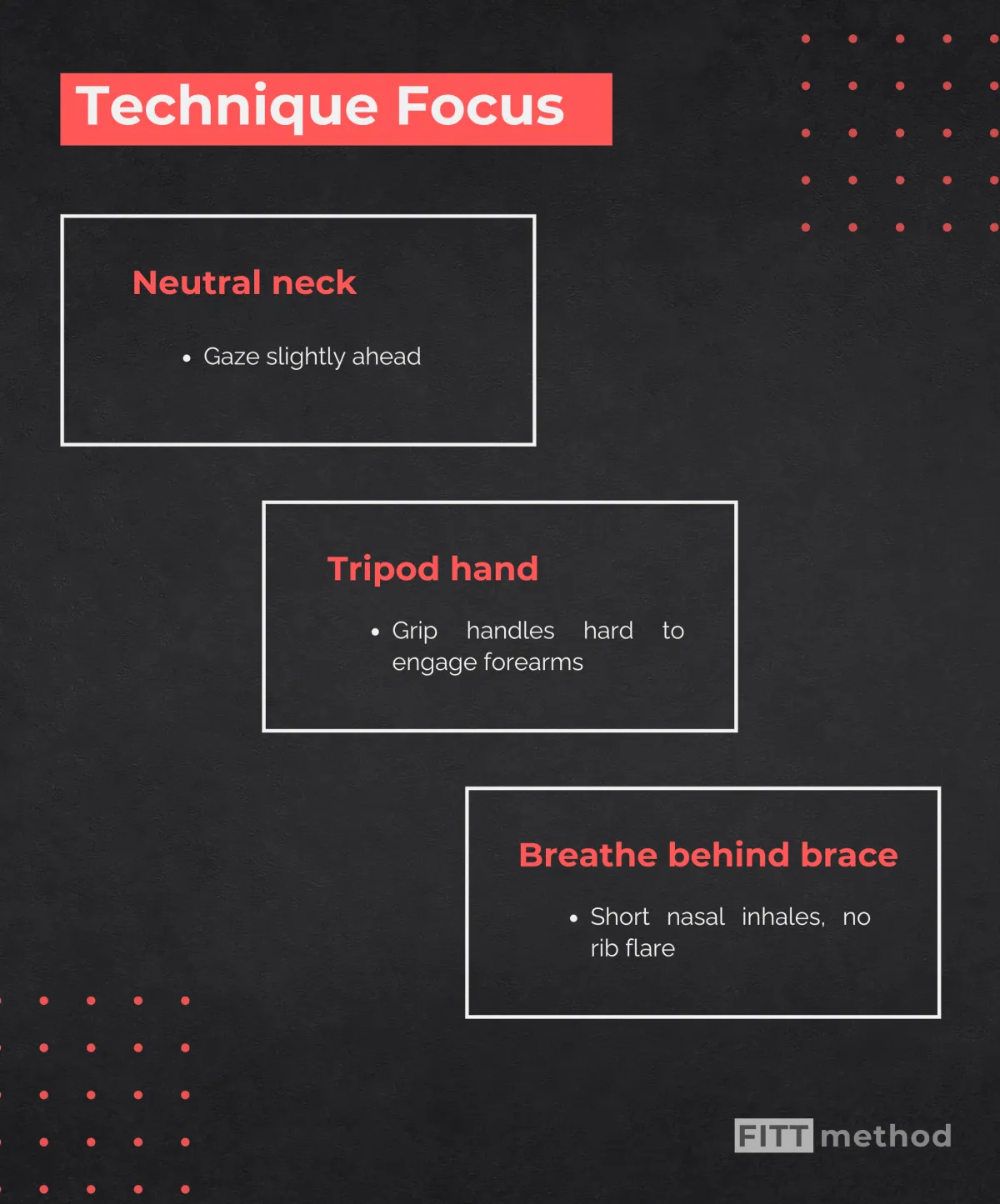
Neutral neck: gaze slightly ahead.
-
Tripod hand: grip handles hard to engage forearms.
-
Breathe behind brace: short nasal inhales, no rib flare.
Common Mistakes
Hips twisting—compensating for weak core. Reduce load or widen stance.
Sagging mid‑line—lost plank tension; cue glute squeeze.
Rowing with shoulders shrugged—focus on driving elbow down and back.
-
Jerking bell—use controlled tempo.
-
Looking up—maintain neutral cervical spine.
-
Uneven grip—use matching dumbbell shapes.
Variations & Progressions
Progress or regress with these options:
-
Kneeling Renegade Row – drop knees to reduce core demand.
-
Band‑Assisted Row – attach light band to minimize load at top.
-
Feet‑Elevated Renegade Row – increase lever, harder on core.
-
Deficit Renegade Row – hands on parallettes for greater ROM.
-
Alternating Row + Push‑Up – add push‑up between each row for conditioning.
Mobility Focus
Tight hip flexors or lats can cause hips to pike or torso to twist. Spend time on couch stretch (2×30 s each side) and foam‑roll lats before heavy sets.
Wrist extension tolerance matters when gripping hex bells, perform wrist rocks and palm pulses in warm‑up.
Benefits & Carryover
Renegade rows train anti‑rotation strength that stabilizes your spine during heavy squats and carries.
They also build unilateral pulling capacity for balanced rowing strength, supporting stronger pull‑ups and bent‑over rows.
Wrapping up What is a Renegade Row
When looking to understand what a renegade row is and how to perform it, dial in plank tension first, then row heavy to build a resilient core and powerful back.